



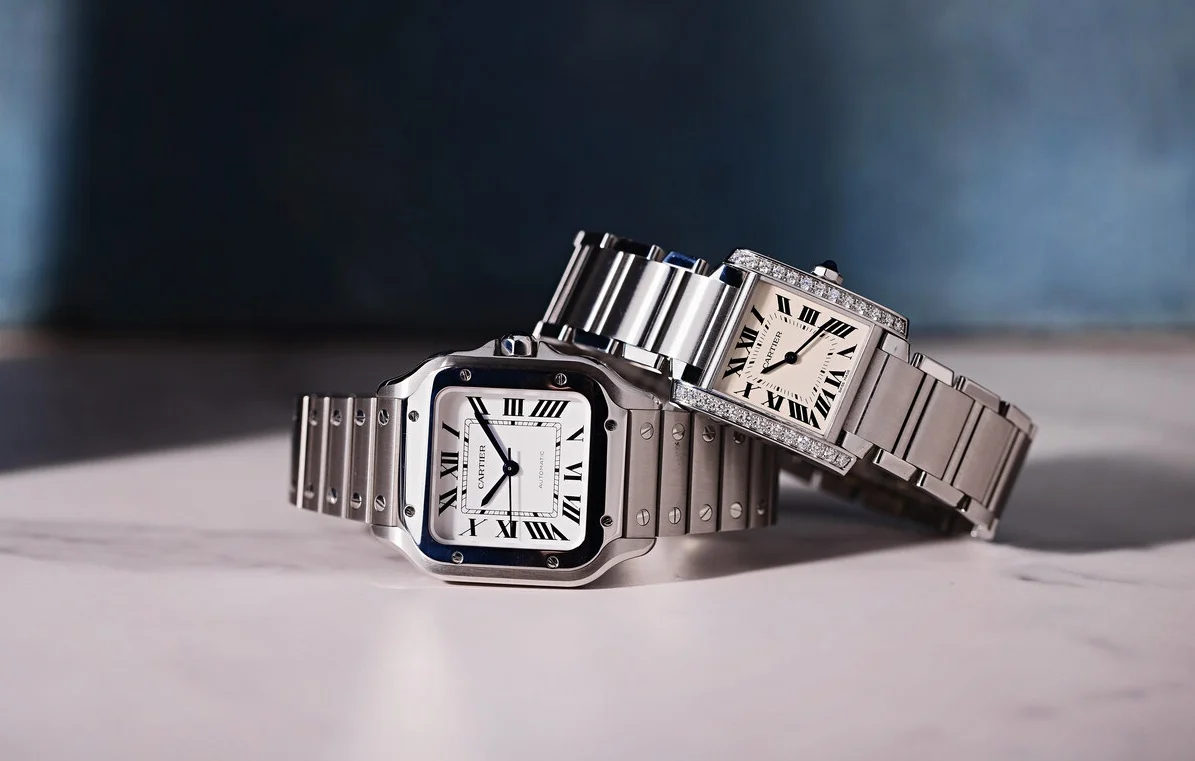
Cartier has always held a distinctive place in the business of fine watchmaking, collaborating tradition, accuracy and eternal popularity. As the year 2026 approaches, numerous consumers are posing the question of whether Cartier timepieces still command its cost and long-term feasibility, particularly when considering the Cartier watches for women as both a personal purchase and an area of investment. With the changing market conditions, evolving taste of buyers, and the growing understanding about horological quality, there is a strong need to evaluate Cartier in terms of precision, longevity, resale value, and heritage in comparison to the short-term trends.
Cartier’s Legacy in Watchmaking
Founded in Paris in 1847, Cartier initially gained recognition as a jeweler to royalty before establishing itself as a serious watch manufacturer. In comparison to brands that were a direct result of tool-watch or engineering works, Cartier assisted in creating the definition of wristwatches as a symbol of high-end timekeeping instruments for everyday wear. The brand has invented some of the earliest wristwatches, such as Santos of 1904 which was created to fit the aviator Alberto Santos-Dumont.
This rich history contributes to the timeless popularity of Cartier watches for women. Even today most of the production designs still cling to early proportions and aesthetics, giving today’s buyers the opportunity to adorn themselves with designs representing over a century of design continuity. This consistency is significant for long-term desirability and building brand authenticity.
Design Philosophy and Timeless Appeal
The recognizable identity is one of the distinguishing features that Cartier watches carry. The collection features cases that are mostly round, square, and gently curved which make Cartier stand out among brands specialized in round sports models. Collections such as Tank, Ballon Bleu, Panthère, and Santos are immediately recognizable without prominent logos or exaggerated detailing.
In the case of Cartier watches for women, this design solution guarantees versatility and durability. The reserved dial designs, roman numerals, sword hand shapes and the use of blue cabochon for crown to symbolically signify ownership make it a visual speech which can never be perceived as outdated with evolving trends. Since Cartier does not aggressively redesign its core models, buyers have the chance to use the same watch over decades, without it looking out of place.
Movement Quality and Technical Reliability
Traditionally, Cartier has been using high grade Swiss movements offered by well-known manufacturers. In the last 10 years, the brand has invested in in-house calibers, particularly in mechanical models. The modern automatic movements like the 1847 MC are designed to be durable, accurate and reliable for everyday use instead of being extremely specified.
Also quartz movements are still popular in Cartier watches for women, especially in smaller case sizes where quartz offers convenience and accuracy. These movements are Swiss-manufactured, thoroughly tested, and have long service down times. Although quartz models might not be according to the taste of mechanical purists, yet they are still precise and inexpensive to maintain, which makes them attractive for long term ownership.
Materials and Build Quality
Cartier uses premium materials in its collection containing stainless steel, 18k yellow gold, rose gold, and white gold. Sapphire crystals are normal and highly scratch resistant. Bracelets and straps are also well-developed while taking comfort and proportion into consideration.
For Cartier watches for women, case thickness and wearability are especially well considered. Most of the models fit well on smaller wrists and do not appear heavy or delicate. The finishing quality, polished surfaces, brushed accents, and accurately engraved details – all meet the expectations of high-quality Swiss watchmaking and help it stand against the test of time.
Brand Reputation and Global Demand
Cartier has one of the most powerful brand reputations in the luxury market. It is instantly identifiable on the international market, not only by watch collectors but by an average buyer as well. This extensive familiarization has a significant role in the resale value and long-term desirability.
Cartier watches for women will still be highly demanded in the primary and secondary markets of 2026. Traditional models, including the Tank and Panthere, tend to have a steady resale value only if the models are kept in good condition with their original paper work. While Cartier watches may not experience speculative price spikes seen in certain sports watches, their consistent demand supports long-term value retention.
Investment Perspective: Stability Over Speculation
When deciding whether a watch is worth the purchase or not, one should differentiate between speculative appreciation and stable value preservation. Cartier clearly belongs to the second category. Pricing strategy of the brand is quite controlled and the volumes of production are taken care of in order to avoid over saturation.
For buyers considering Cartier watches for women, the investment appeal lies in reliability rather than rapid appreciation. Steel models from iconic collections tend to retain a substantial portion of their original value, while precious metal versions offer intrinsic material worth alongside brand equity. Limited editions and discontinued references can command higher resale prices, though Cartier is best viewed as a long-term hold rather than a short-term profit opportunity.
Wearability and Everyday Use
Cartier watch designs are made to blend with day to day life. Numerous models have slim profiles that fit under sleeves, have good fastening straps to ensure security during use, and equal weight distribution. Water resistance is typically suitable for daily activities, though Cartier watches are not designed as professional sports instruments.
In the case of Cartier watches for women, this emphasis on comfort and utility is very crucial. Cartier watches do not lose their structural integrity or visual appeal whether they are worn on a daily basis or saved for special occasions. The brand focuses on proportion which makes the watches comfortable even after being worn for several hours.
Servicing, Maintenance and Longevity
Cartier maintains an international service network with licensed service centers in key markets. Such availability makes sure that the owners do not have to depend on a third-party provider for the maintenance of their watches. Authentic spare parts and certified technicians are used to maintain the functionality and resale value.
Quartz Cartier watches for women normally need battery replacement after every few years, whereas mechanical models require proper servicing after every five to seven years. When properly kept, Cartier watches are reputed to have a life span of generations, which makes them viable long term investments.
How Cartier Compares in 2026
In a market full of technically violent watches and loud design statements, Cartier stands alone as it focuses on clarity, heritage and restraint. Some brands put their focus on wild specifications, whereas Cartier focuses on balance, proportion and timeless design codes.
To buyers looking at Cartier watches for women in 2026, this positioning provides an assurance. Cartier never uses innovation or temporary design alterations, which makes its watches especially appropriate to people who appreciate continuity and permanence of relevance. This consistency enhances confidence in the brand as a stable investment choice.
Conclusion
In 2026, Cartier watches will still be able to explain that the brand is trustworthy, personal, and made of high-quality materials that can retain its value over time. To a woman who is thinking of purchasing a Cartier watch, the investment is not in speculation, but in long-lasting design, excellent performance, strong brand name and long-lasting wearability. With strong sales history, quality materials, and steady demand in the global market, Cartier still remains a good investment for buyers who value refinement, stability, and a watch that does not lose its relevance over time.
