



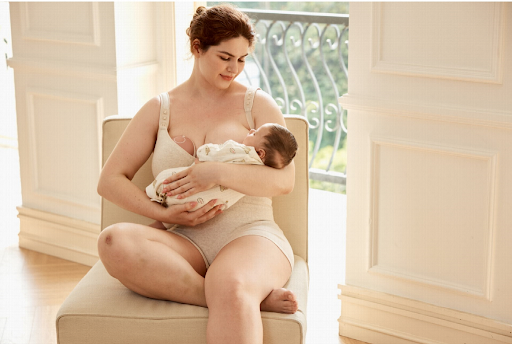
Why Nursing Bra Design Matters More for Fuller Busts
Pregnancy and breastfeeding bring constant changes to breast size, weight, and sensitivity. For parents with fuller busts, these changes can make an everyday bra feel uncomfortable much faster than expected. What fits during late pregnancy may feel restrictive a few weeks postpartum, while a bra that feels comfortable early in the day may fit differently after nursing or pumping.
This is why bra selection should be viewed as a matter of garment design rather than simply choosing a larger cup size. The goal is not maximum compression but balanced support that adapts to changing body measurements while remaining comfortable during long hours of wear.
Support Is a System, Not Just a Cup
Many people assume that support comes primarily from the cups. In reality, bra performance depends on several structural components working together. Clothing designers and bra-fitting specialists generally evaluate four key elements:
A stable underband that anchors the garment without excessive pressure.
Shoulder straps that distribute weight comfortably instead of concentrating it on the shoulders.
Side wings that help contain breast tissue and reduce side spillage.
A supportive back panel that improves overall stability during daily movement.
When these features work together, pressure is distributed across a larger surface area instead of being focused on one location. This often improves comfort during extended nursing sessions and everyday activities.
Why Postpartum Body Changes Affect Fit
Breastfeeding is dynamic. Milk production, feeding frequency, pumping schedules, and natural hormonal fluctuations all influence breast volume throughout the day. Clinical guidance for breastfeeding parents also emphasizes avoiding overly restrictive bras because excessive pressure may contribute to discomfort and, in some situations, clogged milk ducts.
For fuller-busted parents, these normal changes create additional fitting challenges. A narrow band may ride upward, thin straps may dig into the shoulders, and limited side coverage can allow tissue to shift outside the bra during movement. Even if the cup volume appears correct, the overall structure may no longer distribute weight effectively.
For that reason, postpartum bra fitting is less about chasing a single “perfect size” and more about choosing a design that accommodates normal day-to-day variation.
Features Worth Looking For
When comparing nursing bras, it helps to evaluate construction before focusing on appearance. Practical features often include:
Wider shoulder straps that help spread load more comfortably.
Multiple rows of back closures to accommodate changing rib cage measurements.
Soft yet stable underbands that stay in place without excessive compression.
Full side coverage that improves containment without creating unnecessary bulk.
Molded or structured cups that maintain shape while allowing convenient nursing access.
These design choices are intended to improve comfort and consistency rather than dramatically increase support.
A Practical Example of Design in Use
One example is theMomcozy Busty Cotton Nursing Bra, designed specifically for fuller-busted nursing parents. Rather than promoting maximum support, its construction focuses on balancing several structural elements.
The CozyFitClasp adjustable design allows the fit to adapt as breast volume changes throughout breastfeeding. Wide padded shoulder straps help distribute shoulder load more evenly, while the comfortable elastic band works together with a multi-row back closure to improve stability. Fixed molded cups help maintain shape after repeated washing, and the extended side coverage provides a smoother fit for many fuller-bust wearers. The use of premium U.S. cotton fabric also prioritizes breathability and comfort for extended daily wear. These features align with broader garment-design principles that emphasize balanced load distribution instead of relying on any single component.
For parents researching the best full busted nursing bra, these design details may be more meaningful than marketing claims alone. Likewise, evaluating whether a bra functions as a full coverage nursing bra or a supportive nursing bra often depends on how its entire structure performs over the course of everyday nursing—not on one individual feature.
Choosing Comfort That Lasts
There is no universal nursing bra that works for every postpartum body. Breast shape, rib cage measurements, milk production, and personal comfort preferences all vary throughout the breastfeeding journey.
Instead of focusing on a single specification, parents may benefit from considering how band stability, shoulder comfort, side coverage, and adjustability work together as one system. A thoughtfully engineered design can better accommodate natural body changes while supporting everyday routines, making comfort more sustainable over weeks and months rather than only during the first fitting.